FlemingClans.com

"Scotland's Fleming Clan: a Genealogical History" - coming in 2027!
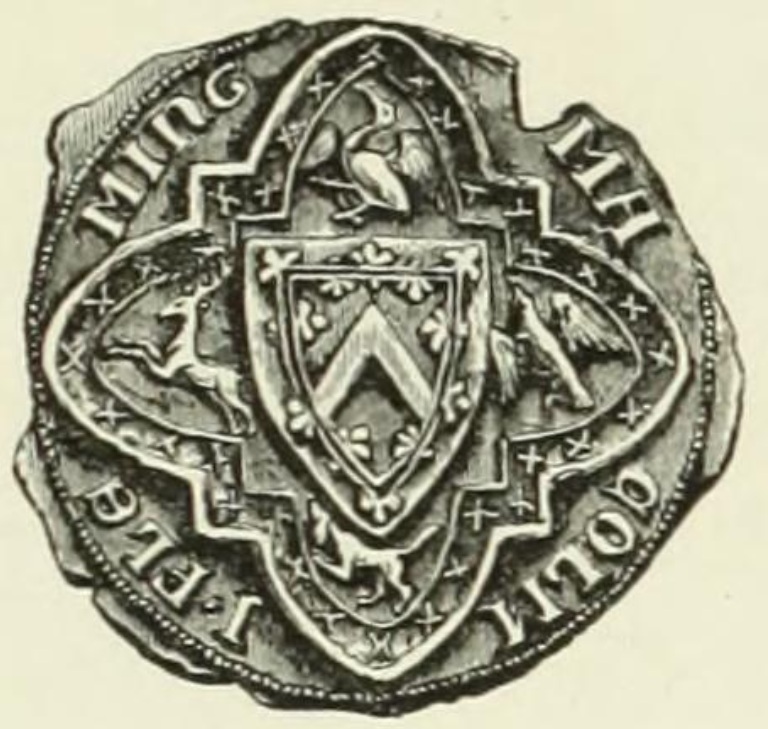 7th chief - Sir Malcolm Fleming of Fulwood, 1st Earl of Wigtown
(c1282 - 1357)
Basic information about this person: \click here\
Malcolm Fleming of Fulwood rose from a modest family of royal and baronial officials to become foster-father to King David II and the first Fleming earl. His defence of Dumbarton Castle after the disaster of Halidon Hill in 1333 helped save the Bruce dynasty, and with it Scotland’s independence.
Origins and training
Malcolm was born around 1282, the eldest of the four sons of Simon Fleming of Tranent; his brothers were William, Hugh and Duncan. Simon seems to have died young, and Malcolm was probably raised at Kirkmichael under the guidance of his grandfather, William Fleming, Constable of Dumbarton and later Steward of Lennox. From William he would have learned castle management, estate administration and the business of local government, skills that later made him one of the outstanding administrators of his age.
Sheriff of Dumbarton
Before 1308 Malcolm was appointed Sheriff of Dumbarton, an office normally held by great families such as the Stewarts of Menteith. His rise owed much to the patronage of the Earl of Lennox and the Menteith Stewarts, to whom his grandfather had introduced him, and both families were loyal supporters of Robert Bruce. Family historians long claimed that a Robert Fleming, supposedly Malcolm’s father, helped Bruce kill John Comyn at Dumfries in 1306. No contemporary record supports the story, and if any Fleming was with Bruce that day it was most likely Malcolm himself.
Malcolm fought at Bannockburn in 1314, and Robert I granted him the barony of Kirkintilloch, or Lenzie, formerly held by the Comyns, together with Poulton in Wigtownshire, while Auchendennan on Loch Lomond came to him from the Lennox affinity. In October 1314, styled “of Fulwood” for the only time, he lent two hundred merks to Sir Thomas Moreham on the security of Sichmore near Dunipace, an estate that stayed with the family for three centuries. In 1321 Walter the Steward granted him an annuity from Holyrood Abbey’s barony of Kerse.
Foster-father of a king
When Robert I’s son David was born in 1324, the prince was given a household at Turnberry and made Earl of Carrick, and Malcolm became bailie of the earldom. Malcolm’s wife Marjory was chosen as David’s wet nurse, so the couple became foster-parents of the future David II, a bond that in Gaelic Carrick was almost as strong as blood. On 20 February 1328 Malcolm became steward of the royal household, and the king contributed forty pounds to the wedding of Malcolm’s son John. After Robert I’s death in 1329, which Malcolm helped to provision, the Guardian entrusted him with the upbringing of the boy king and his queen.
Saviour of the dynasty
In 1332 Edward Balliol invaded and won the Battle of Dupplin Moor. Malcolm had already prepared Dumbarton Castle as a refuge, and he swiftly carried King David and Queen Joan there. At Halidon Hill on 19 July 1333 he fought in the second division with the Lennox earls and the Menteith Stewarts and was one of the few to escape. He held Dumbarton, one of only five castles still in Bruce hands, and sheltered both the young king and his heir, Robert Stewart, there. In November he negotiated with Edward III in England, and in 1334 he escorted the king and queen to safety in France, where they lived at Château Gaillard, attended by Malcolm's daughter Evota. His properties at Berwick, Bondington and Caldwell were seized by the English.
The historian Richard Oram has argued that it was Malcolm’s decision to remain loyal and his retention of Dumbarton that prevented the collapse of the Bruce kingship. In the following years he helped link the king’s court in exile with his regents in Scotland.
Earl of Wigtown
David II returned in 1341 and rewarded his foster-father richly. In June he received free warren in his baronies of Lenzie, Kilmaronock and Dalziel, and in November 1341 David created him Earl of Wigtown, with Farines, the Rhinns and the burgh and sheriffdom of Wigtown, for the service of five knights. The earldom was heritable only by the male heirs of his body, and it carried jurisdiction over robbery, rape, murder and arson, normally reserved to the crown. Malcolm also received Mochrum, which he exchanged for Cardoness in 1342. Wigtown was a former Comyn stronghold far from his base, and with forces drawn from Carrick he had to impose his authority there. See Estate: Earldom of Wigtown.
His seal of 1344 (pictured above) shows the arms the Fleming chiefs have borne ever since: a silver chevron within a double tressure on red, the arms of the Earls of Carrick with the colours reversed. In 1336 and 1344 he endowed the Dominican friars of Ayr, apparently preparing his burial place there, and in 1343 the Pope allowed him and Marjory to choose their own confessor at the hour of death. In July 1344, with Robert Stewart, he captured a man claiming to be the king’s cousin Alexander Bruce, who was hanged at Ayr.
Neville’s Cross and decline
Malcolm was captured with the king at Neville’s Cross on 17 October 1346. Edward III ordered that he was on no account to be ransomed, but while held at Newcastle he delayed his transfer to the Tower by pleading illness, bribed one of his gaolers, Robert de la Vale, and escaped to Scotland. He later rewarded de la Vale with Dalziel and Kilsyth.
With the king a prisoner, Robert Stewart ruled as Guardian and sidelined David’s loyalists. Malcolm’s son John died, perhaps at Neville’s Cross or in the plague of 1349, and his grandson Thomas served as a hostage for the king's return to Scotland. Around 1353 Malcolm lost the governorship of Dumbarton Castle, with Kilmaronock and Inchcailloch, to his own grandson John Danielstoun, Stewart’s son-in-law.
Death and legacy
In April 1357 Malcolm passed Sichmore to his cousin Malcolm Fleming of Biggar, and that September he sealed the Parliament’s agreement to the treaty for David’s ransom. His last act, in December 1357, was to give lands in his earldom to Glenluce Abbey. He died before 11 January 1358. His widow Marjory, Countess of Wigtown, died about three years later; her lands at Glamis were later granted to Sir John Lyon, ancestor of Queen Elizabeth the Queen Mother.
Malcolm and Marjory had a son, John, and three daughters: Mary, who married John Danielstoun; Marjory, who married William de Fawsyde; and Evota, who married John Ramsay. Remembered as “Malcolm the Good”, he died one of the most successful administrators of fourteenth-century Scotland. With only one grandson, who left no male heir, his hope of founding a great dynasty in Wigtown was not realised, but his lands and achievements sustained several branches of the Fleming family for generations.